- Industrial zone, South of Anping Town, Hengshui, Hebei, China.
- sales@hfpetromesh.com
- +86-18931809706
Helideck Perimeter Safety Nets: Enhanced Helipad Protection
The Critical Role of Helideck Perimeter Safety Nets in Modern Aviation Safety
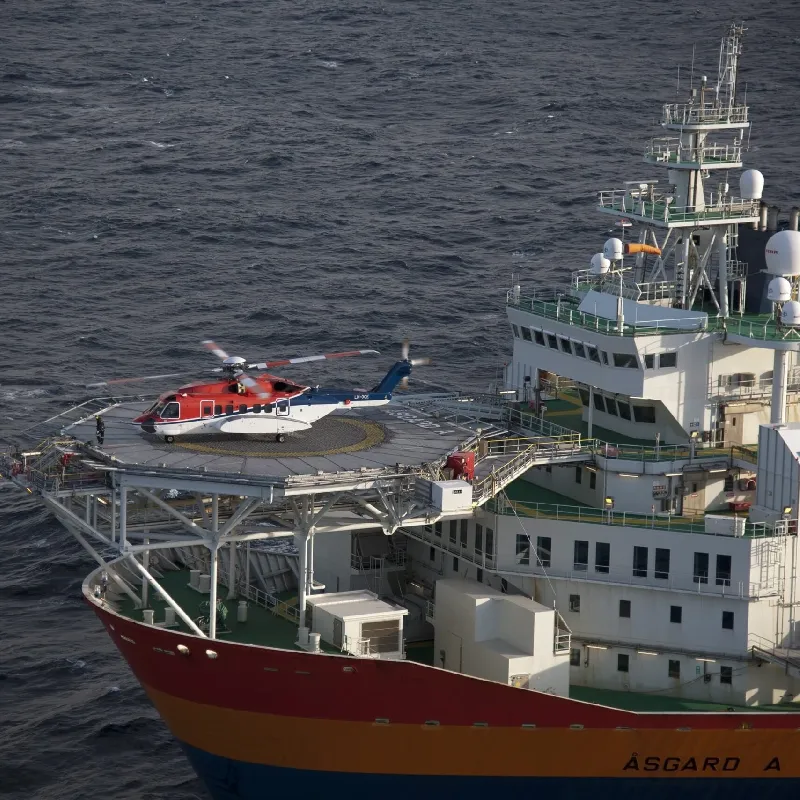
In environments where helicopter operations are routine, such as offshore platforms, marine vessels, and elevated urban structures, the safety of personnel is paramount. A crucial component in ensuring this safety is the robust deployment of helideck perimeter safety nets. These specialized netting systems are engineered to prevent falls from height, offering a critical safety barrier around the periphery of helidecks. Beyond mere compliance, the installation of high-quality perimeter safety netting reflects a profound commitment to operational integrity and human welfare, mitigating risks associated with turbulence, unexpected movements, or personnel missteps during critical operations.
The design and material science behind a modern helideck perimeter safety net address complex challenges, including extreme weather conditions, corrosive marine environments, and stringent aviation safety regulations. Our focus here delves into the technical specifications, advanced manufacturing processes, and diverse application scenarios that define the current landscape of helideck perimeter safety solutions, emphasizing performance, durability, and compliance with international standards.
Industry Trends and Regulatory Landscape for Helideck Safety
The sector of helideck safety is continuously evolving, driven by technological advancements, heightened safety awareness, and increasingly stringent international regulations. Current industry trends highlight a move towards lighter, stronger, and more durable materials, such as advanced high-modulus polyethylene (HMPE) fibers and marine-grade stainless steel components, offering superior resistance to UV degradation, saltwater corrosion, and extreme temperatures. There's also a growing emphasis on modular and easily deployable systems that reduce installation time and maintenance efforts.
Regulatory bodies like the International Civil Aviation Organization (ICAO) and the UK Civil Aviation Authority (CAA) with its CAP 437 document (Standards for Offshore Helicopter Landing Areas) set the benchmark for helideck safety. These standards meticulously detail requirements for fall protection systems, including the mesh size, load-bearing capacity, energy absorption, and installation parameters of perimeter safety netting. Compliance is not merely a legal obligation but a testament to an operator’s commitment to preventing fatalities and serious injuries, underscoring the critical importance of selecting certified and high-performance helideck perimeter safety nets.
Detailed Manufacturing Process of Perimeter Safety Netting
The production of high-performance helideck perimeter safety nets involves a sophisticated multi-stage process designed to ensure maximum strength, durability, and compliance.
1. Material Selection & Extrusion:
The foundation of a superior safety net begins with the careful selection of raw materials. For modern perimeter safety netting, this typically involves high-tenacity synthetic fibers such as HMPE (e.g., Dyneema, Spectra) or premium-grade polyester. These materials are chosen for their exceptional strength-to-weight ratio, UV stability, and resistance to environmental degradation. The selected polymers undergo an extrusion process, where they are melted and forced through a die to create continuous filaments of precise diameter and molecular orientation, optimizing tensile strength.
2. Weaving/Knitting & Knotless Technology:
These filaments are then fed into specialized industrial weaving or knitting machines. Advanced knotless netting technology is often employed. Unlike traditional knotted nets, knotless construction offers superior energy absorption characteristics, distributes stress more evenly across the mesh, and eliminates potential weak points associated with knots, significantly enhancing the net's impact resistance and longevity. The mesh size is meticulously controlled to meet regulatory standards, typically preventing objects larger than a specified dimension from passing through.
3. Cutting & Edge Finishing:
Once fabricated, the large netting panels are precisely cut to the required dimensions for specific helideck installations. Edges are then reinforced through processes like stitching with high-strength thread, ultrasonic welding, or the integration of a robust border rope. This edge finishing prevents fraying and provides a secure attachment point for tensioning systems and structural supports.
4. Hardware Integration & Assembly:
Crucial to the functionality of a perimeter safety net are its attachment components. Marine-grade stainless steel (e.g., 316L) thimbles, shackles, turnbuckles, and tensioning wires are integrated into the net's border. These components undergo their own precision manufacturing (e.g., forging for strength, CNC machining for accurate dimensions) and are selected for their corrosion resistance and load-bearing capabilities, ensuring a secure and durable installation.
5. Rigorous Testing & Quality Assurance:
Each helideck perimeter safety net undergoes comprehensive testing. This includes material tensile strength tests (e.g., ASTM D412, ISO 37), UV accelerated aging tests, salt spray corrosion tests for hardware (e.g., ASTM B117), and dynamic load testing to simulate impact scenarios. Certification bodies often oversee these tests, ensuring adherence to international standards such as ISO 17025 for testing laboratories and specific aviation standards like CAP 437 Section 4.5. This stringent quality control guarantees a service life often exceeding 10-15 years under typical operating conditions, offering superior corrosion resistance and energy saving through reduced maintenance needs compared to less robust systems.
Target Industries:
- Offshore Oil & Gas: Critical for personnel safety on drilling rigs, production platforms, and FPSOs.
- Marine & Naval: Essential for safety on superyachts, research vessels, naval ships, and other maritime craft with helipads.
- Healthcare & Emergency Services: Providing secure landing zones on hospital rooftops and remote medical facilities.
- High-Rise Commercial/Residential: Ensuring safety on elevated helipads in urban environments.
Technical Specifications and Performance Parameters
Understanding the precise technical parameters of helideck perimeter safety nets is crucial for ensuring optimal performance and compliance. These nets are not generic fall protection; they are highly specialized engineering solutions.
| Parameter | Specification (Typical High-Performance Net) | Compliance Standard |
|---|---|---|
| Material Composition | High-Modulus Polyethylene (HMPE) or UV-stabilized Polyester fibers; 316L Stainless Steel hardware | ISO 1806, ASTM D412 |
| Mesh Size (Opening) | Typically 75x75 mm (3x3 inch) or 100x100 mm (4x4 inch) | CAP 437 (latest edition), ICAO Annex 14 Vol II |
| Breaking Strength (Net Mesh) | Min. 2.2 kN per mesh segment (approx. 500 lbs) | EN 1263-1, ANSI A10.11 |
| Impact Energy Absorption | Capable of absorbing 4.5 kJ (equivalent to 100 kg mass falling 4.5m) | CAP 437 Appendix C, EN 1263-2 |
| UV Resistance | Excellent, >95% strength retention after 5000 hours QUV-B exposure | ASTM G154, ISO 4892-3 |
| Corrosion Resistance (Hardware) | Salt spray test >1000 hours with no visible corrosion | ASTM B117 |
| Temperature Range | -40°C to +70°C (-40°F to +158°F) | Manufacturer's internal testing |
| Service Life (Estimated) | 10-15 years with proper maintenance | Industry best practice, field data |
These specifications underscore the advanced engineering required for reliable perimeter safety netting, capable of withstanding the harsh conditions typical of helideck environments while providing steadfast fall protection.
Application Scenarios and Technical Advantages
The versatility and critical safety function of helideck perimeter safety nets extend across a multitude of high-stakes environments, each presenting unique challenges that these engineered solutions effectively address.
Typical Application Scenarios:
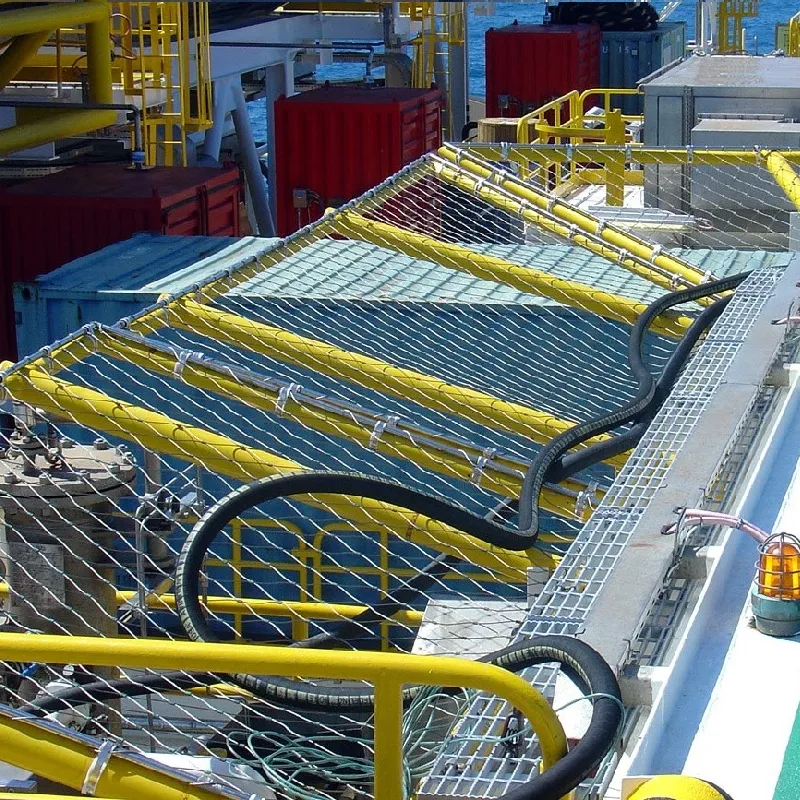
- Offshore Oil & Gas Platforms: Critical for personnel safety during helicopter transfers, maintenance, and emergency response, providing a robust fall-arrest system around the helideck edge, even in turbulent sea conditions.
- Floating Production Storage and Offloading (FPSO) Vessels: Given the dynamic motion of FPSOs, stable and reliable helideck perimeter net systems are indispensable to counteract ship movement and ensure fall protection.
- Naval Ships & Research Vessels: Essential for safe flight deck operations, particularly in open sea, where sudden pitching and rolling can pose severe hazards.
- High-Rise Building Helipads: Urban helidecks require aesthetically integrated yet highly functional perimeter nets to protect both personnel and the public below from potential falling objects or falls from height.
- Hospital Helipads: Ensuring secure operations for air ambulances and critical medical transfers, where rapid and safe deployment is paramount.
Key Technical Advantages:
- Unparalleled Corrosion Resistance: Utilizing materials like HMPE and marine-grade 316L stainless steel, these nets defy the corrosive effects of saltwater, industrial pollutants, and atmospheric chemicals, significantly extending service life without degradation.
- Superior UV Stability: Advanced synthetic fibers are engineered with inherent or additive UV stabilizers, preventing material breakdown, embrittlement, and loss of strength due to prolonged sun exposure, a common issue with inferior products.
- High Energy Absorption: The knotless construction and material elasticity allow the netting to absorb substantial impact energy, minimizing the forces exerted on a fallen individual and the supporting structure.
- Lightweight & Easy Installation: Despite their strength, modern safety nets are considerably lighter than rigid barriers, facilitating easier handling, quicker installation, and reducing structural load on helidecks.
- Low Maintenance Requirements: The intrinsic properties of the materials mean less frequent inspection for corrosion or degradation, leading to reduced operational costs and improved resource allocation.
- Visual Clarity & Operational Efficiency: Unlike solid barriers, nets maintain visibility from the helideck, which is crucial for pilots and ground crew, without obstructing airflow or light.
Vendor Comparison: Evaluating Helideck Perimeter Netting Solutions
Choosing the right vendor for helideck perimeter safety nets is a critical decision that impacts long-term safety, compliance, and operational expenditure. A comprehensive evaluation goes beyond initial cost to consider material quality, adherence to standards, customization capabilities, and after-sales support.
| Feature/Criterion | Premium Vendor Solution (e.g., HF PetroMesh) | Standard/Budget Vendor Solution |
|---|---|---|
| Material Quality | High-Modulus Polyethylene (HMPE) or UV-stabilized Polyester; 316L SS hardware; certified raw materials. | Nylon, standard Polyester; 304 SS or galvanized steel hardware; less stringent material sourcing. |
| Net Construction | Knotless netting for superior strength & energy absorption; robust border ropes. | Knotted netting, potential for stress concentration and premature wear. |
| Regulatory Compliance | Fully compliant with CAP 437, ICAO, DNV, Lloyd's Register certifications. Extensive test data. | May meet basic safety standards but often lack specific aviation certifications; limited test data. |
| UV & Corrosion Resistance | Engineered for extreme environments, with proven longevity (10-15+ years). | Moderate resistance, shorter expected service life (3-7 years) in harsh conditions. |
| Customization | Full engineering design for custom sizes, shapes, mounting solutions, and specialized requirements. | Limited customization, primarily off-the-shelf sizes. |
| Warranty & Support | Comprehensive warranty (e.g., 5-10 years), dedicated after-sales service, technical support. | Basic warranty (1-2 years), limited or outsourced support. |
| Installation & Maintenance | Designed for straightforward installation; low maintenance, detailed guides. | May require more complex installation; higher maintenance due to material degradation. |
While a budget solution may offer a lower initial outlay, the long-term costs associated with shorter service life, increased maintenance, potential non-compliance penalties, and most critically, compromised safety, typically far outweigh any upfront savings. Investing in a premium perimeter safety net from a reputable vendor ensures peace of mind and enduring safety performance.
Customized Solutions and Application Case Studies
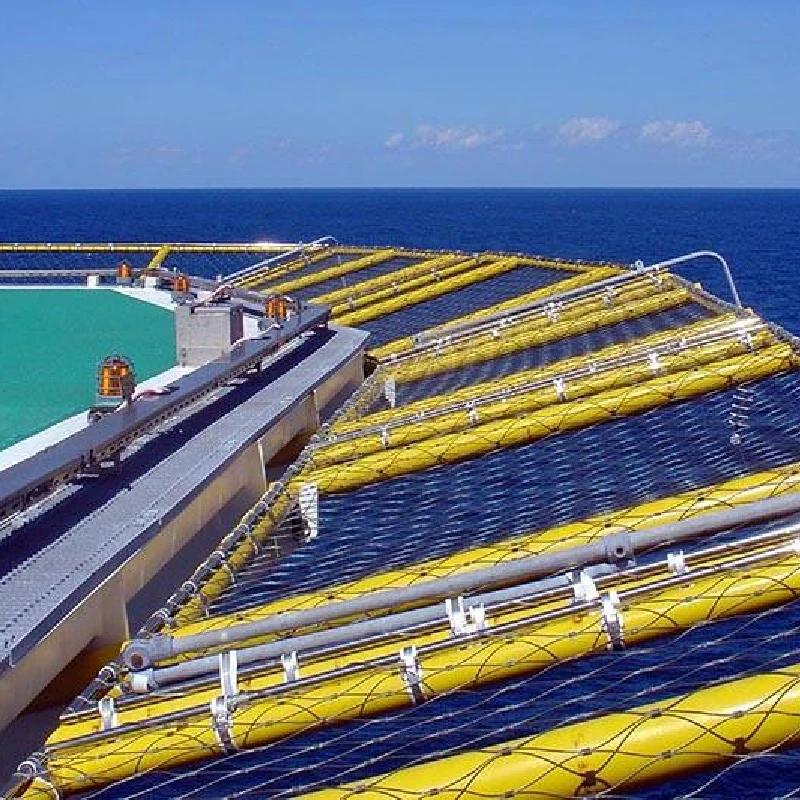
Every helideck installation presents unique geometries, environmental exposures, and operational requirements. This necessitates a strong capability for providing customized helideck perimeter safety nets rather than relying solely on standard sizes. Tailored solutions ensure perfect fit, optimal safety performance, and streamlined integration with existing structures.
Customization Options:
- Size & Shape: Bespoke netting panels to fit irregular helideck dimensions, including cut-outs for equipment or varying angles.
- Material Variants: Selection of specific fiber types or coatings to enhance resistance against particular chemicals, extreme temperatures, or specialized operational needs.
- Attachment Systems: Design and fabrication of custom mounting hardware, including specialized stanchions, quick-release mechanisms, or integrated tensioning systems for ease of deployment and removal.
- Color & Visibility: Options for specific colors or reflective elements to improve visibility in low-light conditions or meet aesthetic requirements.
- Load & Impact Ratings: Engineering nets to exceed standard load capacities for specific high-risk applications or unique regulatory demands.
Application Case Study: Offshore Wind Farm Support Vessel
Challenge: A major offshore wind farm operator required a robust and easily deployable perimeter safety net system for their new class of Service Operation Vessels (SOVs). The helidecks faced continuous exposure to North Sea conditions – high winds, corrosive saltwater spray, and frequent temperature fluctuations. Existing solutions either lacked sufficient durability or proved too cumbersome for frequent installation/removal during maintenance periods.
Solution: Our team engineered a customized netting system utilizing a high-tenacity HMPE fiber, known for its exceptional strength and UV/corrosion resistance. The design incorporated a modular structure with marine-grade 316L stainless steel quick-release fittings, allowing for rapid deployment in under 30 minutes by a small crew. The mesh was optimized for CAP 437 compliance, with independent load testing confirming a safety factor exceeding 2.5 times the standard requirement. Each net panel was factory-tested to ISO 1806 standards.
Outcome: The SOV operator reported significantly improved operational efficiency due to the ease of installation and reduced maintenance. More importantly, the robust helideck perimeter net system provided crew members with enhanced confidence and safety during all helideck operations, contributing to a perfect safety record since deployment. Customer feedback highlighted the exceptional durability and the seamless integration with the vessel’s existing infrastructure.
Ensuring Trustworthiness: FAQs, Lead Time, Warranty & Support
Frequently Asked Questions (FAQs)
- Q: What are the primary standards governing helideck perimeter safety nets?
- A: The most influential standards include the UK CAA CAP 437 (Standards for Offshore Helicopter Landing Areas) and ICAO Annex 14 Volume II (Aerodromes, Heliports). Compliance with ISO 1806 for netting and marine classification society rules (e.g., DNV, Lloyd's Register) is also crucial for materials and installation.
- Q: How often should perimeter safety netting be inspected?
- A: Regular visual inspections should be performed daily or before each helicopter operation. More thorough inspections, including load tests for hardware and UV degradation checks, are recommended annually or semi-annually, in line with manufacturer guidelines and regulatory requirements.
- Q: Can your nets withstand extreme weather conditions?
- A: Yes, our helideck perimeter nets are engineered from high-performance materials like HMPE and 316L stainless steel, specifically designed to endure harsh marine and offshore environments, including high winds, heavy rain, extreme temperatures (-40°C to +70°C), and corrosive saltwater spray, maintaining their integrity and performance.
- Q: Is professional installation required for perimeter safety netting?
- A: While our systems are designed for straightforward installation, we strongly recommend professional installation or supervision by qualified personnel. This ensures proper tensioning, secure attachment, and full compliance with safety standards, maximizing the net's effectiveness and longevity.
Lead Time & Fulfillment
Our standard lead time for customized helideck perimeter safety nets typically ranges from 4 to 8 weeks, depending on the complexity of the design, material availability, and order volume. For urgent requirements or standard configurations, expedited production and shipping options are available. We maintain robust supply chain logistics to ensure timely delivery to global locations, including remote offshore sites. Project timelines are meticulously managed with transparent communication at every stage, from design approval to final dispatch.
Warranty Commitments
We stand behind the quality and durability of our perimeter safety netting products. All perimeter safety nets come with a comprehensive 5-year warranty covering material defects and manufacturing faults under normal operating conditions. This warranty reflects our confidence in the superior materials and stringent quality control processes employed, ensuring a reliable and long-lasting safety solution for your operations.
Dedicated Customer Support
Our commitment to our clients extends far beyond product delivery. We offer dedicated technical support, available 24/7 for critical operational inquiries. Our team of experienced engineers and safety specialists provides guidance on product selection, installation, maintenance, and compliance queries. For inquiries or support, please contact us via the details provided on our website. We are proud to partner with leading offshore operators and marine organizations, providing reliable solutions for decades.
Conclusion
The implementation of high-grade helideck perimeter safety nets is an indispensable investment in operational safety and regulatory compliance for any entity involved in helicopter operations. By selecting technologically advanced materials, adhering to rigorous manufacturing processes, and leveraging expert customization, businesses can significantly mitigate risks, enhance personnel protection, and ensure seamless, uninterrupted operations. Choosing a certified and experienced vendor is paramount to securing a solution that offers enduring performance and unparalleled trustworthiness.
References
- Civil Aviation Authority. (2023). CAP 437: Standards for Offshore Helicopter Landing Areas. UK CAA.
- International Civil Aviation Organization. (2022). Annex 14 Volume II: Aerodromes, Heliports. ICAO.
- ISO 1806:2018. (2018). Fishing nets - Netting - Determination of mesh breaking strength of netting. International Organization for Standardization.
- ASTM B117-19. (2019). Standard Practice for Operating Salt Spray (Fog) Apparatus. ASTM International.
- EN 1263-1:2021. (2021). Safety nets - Part 1: Safety requirements, test methods. European Committee for Standardization.
-
The Ultimate Guide to Choosing a French Drain Grate CoverNewsApr.16,2026
-
Ultimate Guide to Durable Metal Channel Drain Grates for DrainageNewsApr.09,2026
-
Driveway Channel Drain Grate Systems for Effective Water ManagementNewsApr.07,2026
-
Comprehensive Guide to Durable Cast Iron Trench Drain Covers for Various ApplicationsNewsApr.04,2026
-
Comprehensive Guide to Driveway Storm Drain Grates for Optimal Water ManagementNewsMar.31,2026
-
Comprehensive Guide to Durable Steel Driveway Grates for Enhanced DrainageNewsMar.28,2026